


 English
Uutiset
What Is a Tarpaulin? A Direct Definition
A tarpaulin is a sheet of flexible, water-resistant material used to cover, protect, or enclose objects, structures, and open spaces from rain, dust, sunlight, and wind. The simplest tarpaulin definition centers on three properties: a coated or laminated fabric base, sealed seams that block moisture, and reinforced edges that allow the sheet to be tied down or fastened. Among the many fabric options on the market, the PVC Tarpaulin Cover is the most widely produced type because polyvinyl chloride coating gives a single sheet both flexibility and a tear strength that plain canvas cannot match at the same thickness.
In practical terms, when someone asks for a tarpaulin they are usually asking for a cover that can sit outdoors for months without cracking, fading, or letting water through the stitching. A PVC Tarpaulin Cover meets that need because the PVC layer is bonded to both sides of a polyester or nylon mesh, so the fabric core never touches rain directly. This construction is why PVC tarpaulin sheeting shows up on truck side curtains, warehouse roofing, swimming pool covers, and temporary shelters across very different climates.
Core Materials Used in Tarpaulin Construction
Three fabric families dominate tarpaulin production, and each behaves differently once exposed to sun, friction, or cold. Polyethylene (PE) tarpaulins are woven and laminated rather than coated, which makes them lighter but more prone to pinhole leaks after repeated folding. Canvas tarpaulins, made from cotton or cotton-polyester blends, breathe well and resist sparks, which is why they remain common on construction sites, but they absorb water and gain considerable weight when wet. The PVC Tarpaulin Cover sits between the two: it is heavier than PE but does not absorb moisture, and its coated surface resists abrasion far longer than canvas.
| Material | Typical Weight (gsm) | Water Resistance | Outdoor Lifespan |
|---|---|---|---|
| PVC Coated Tarpaulin | 280 - 1100 | Fully waterproof | 3 - 8 years |
| Woven Polyethylene | 90 - 250 | Water resistant, not fully sealed | 1 - 3 years |
| Cotton Canvas | 300 - 650 | Absorbs water, dries slowly | 2 - 5 years |
PVC Tarpaulin Cover: Specifications That Matter
Not every PVC Tarpaulin Cover is built the same way, and the gap between a budget sheet and a heavy-duty sheet shows up in four measurable areas: fabric weight, tensile strength, coating thickness, and seam type.
Fabric weight and what it tells you
Weight is expressed in grams per square meter (gsm). A 280-310 gsm sheet suits light covering jobs such as garden furniture or short-term pallet protection. Mid-range sheets at 500-650 gsm handle truck curtains and trailer covers that face daily friction. Heavy industrial sheets above 900 gsm are used for tank covers, mining equipment shelters, and structures that must resist wind loads above 100 km/h.
Tensile and tear strength
Tensile strength describes how much pulling force the fabric withstands before the threads break, while tear strength measures resistance once a cut or puncture has already started. A well-made PVC Tarpaulin Cover at 650 gsm typically reaches a warp tensile strength near 2,800 - 3,200 N/5cm, figures drawn from routine fabric testing used across coated-fabric manufacturing. Lower tensile numbers usually point to thinner base yarn or reduced yarn count per inch, which shortens service life even if the PVC coating looks identical on the surface.
Coating thickness and UV stabilizers
The PVC layer itself ranges from 0.1mm to 0.4mm per side depending on intended use. Outdoor sheets need UV stabilizers blended into the PVC compound; without them, the surface chalks and turns brittle within a single hot season. Sheets rated for prolonged sun exposure usually list a UV-resistant additive package on the product specification sheet rather than relying on color pigment alone.
| Grade | Weight (gsm) | Common Use |
|---|---|---|
| Light | 280 - 400 | Furniture covers, small equipment |
| Medium | 450 - 650 | Truck curtains, trailer covers |
| Heavy | 750 - 1100 | Tank covers, structural shelters |
How a PVC Tarpaulin Cover Is Manufactured
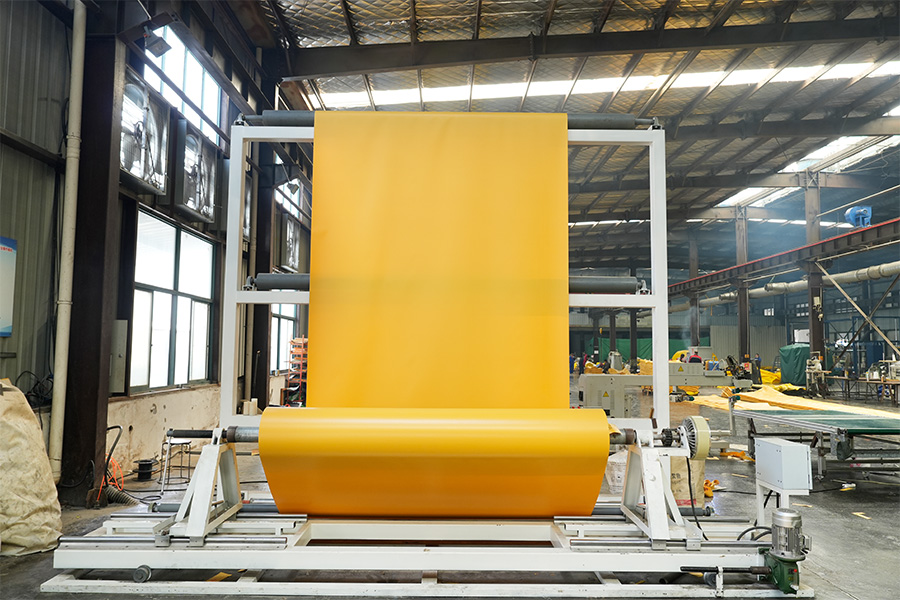
Production follows a fixed sequence, and each stage directly affects the final sheet's strength and water tightness.
- Base fabric weaving: polyester or nylon yarn is woven into a grid, with yarn count determining the eventual tensile strength.
- Coating application: PVC paste is spread on both faces using a knife-over-roller process, building up the coating in controlled layers.
- Curing: the coated fabric passes through heated ovens so the PVC fuses into the weave instead of sitting as a loose film.
- Surface finishing: a lacquer or matte topcoat is added for additional UV and abrasion resistance.
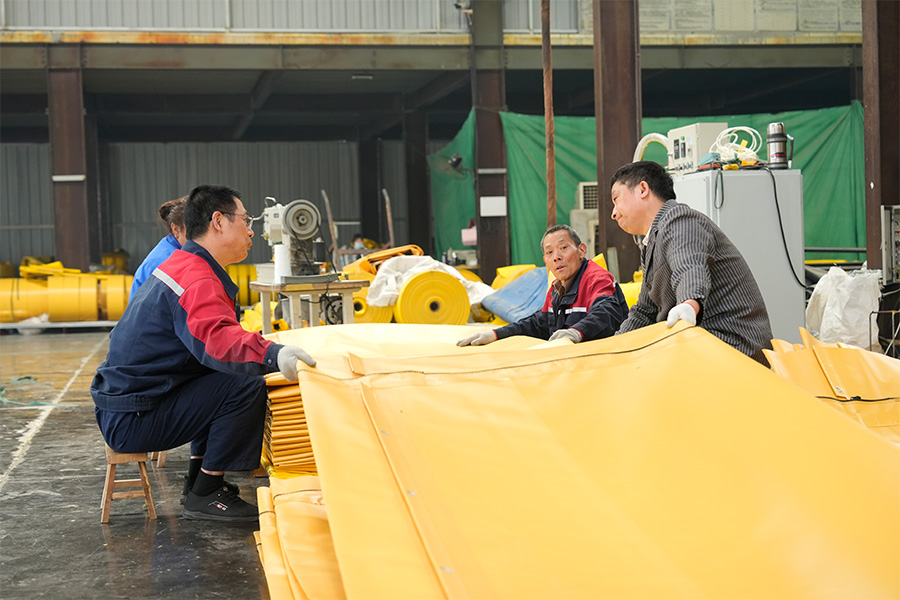
- Cutting and seaming: sheets are cut to size and joined with hot-air or high-frequency welding rather than stitching, since stitched holes would defeat the waterproof seal.
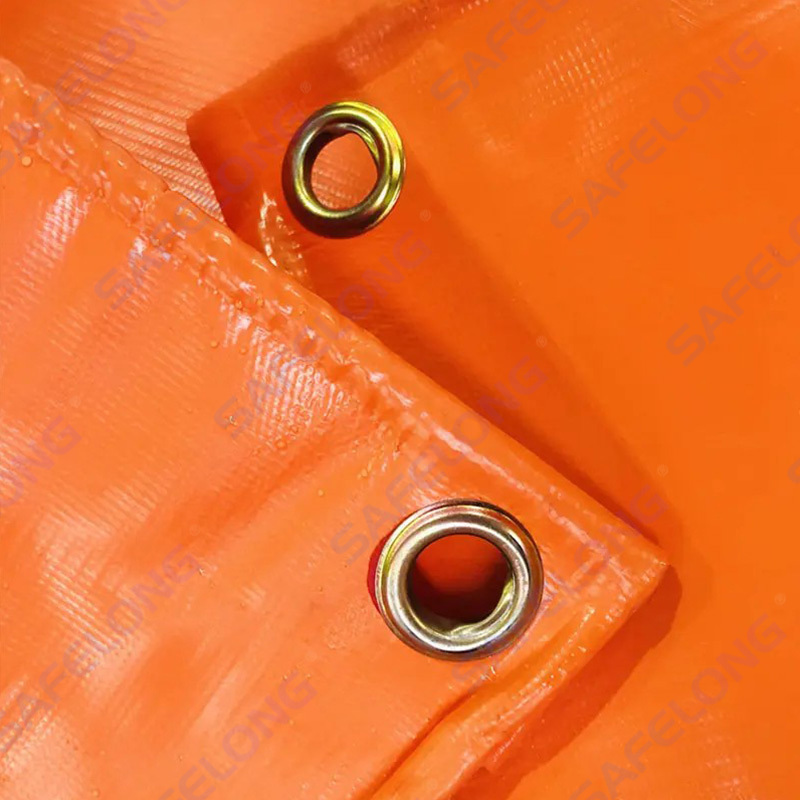
- Edge reinforcement: webbing is welded along the perimeter and eyelets are punched at set intervals for tie-down ropes.
Welded seams are the detail that separates a genuine PVC Tarpaulin Cover from a fabric sheet that merely looks similar. Sewn seams on uncoated material rely on thread alone, and thread holes become entry points for water over time. A welded seam fuses the PVC layers themselves, so the joint is often stronger than the surrounding fabric.
Where PVC Tarpaulin Covers Are Actually Used
The range of applications is wide because the same base material can be adjusted in weight, color, and flame treatment to suit very different jobs.
- Logistics: truck side curtains, container liners, and flatbed load covers that need to survive daily loading impacts.
- Agriculture: hay and grain covers, greenhouse side panels, and livestock shelter roofing.
- Construction: scaffolding wraps, debris containment, and temporary site enclosures during weather-sensitive work.
- Marine and outdoor leisure: boat covers, pool covers, and awnings exposed to constant moisture.
- Industrial storage: tank covers, equipment shrouds, and stockpile covers at mining or quarry sites.
Each of these uses asks for a slightly different balance between weight and flexibility. A boat cover, for example, gets folded and unfolded often, so a softer, lighter PVC Tarpaulin Cover prevents the material from cracking at the fold lines. A stockpile cover, by contrast, stays in one position for months, so a heavier sheet with stronger UV stabilizers is the better fit even though it is harder to handle.
Choosing the Right Tarpaulin for the Job
Selecting a cover comes down to matching three variables to the environment: expected wind exposure, how often the sheet will be moved, and the temperature range it must survive.
| Condition | Recommended Weight | Reason |
|---|---|---|
| High wind areas | 750 gsm+ | Resists flapping and edge tearing |
| Frequent folding | 280 - 450 gsm | Stays flexible at fold lines |
| Long-term fixed cover | 650 - 900 gsm | Balances UV resistance with handling weight |
Maintenance Habits That Extend Lifespan
A PVC Tarpaulin Cover lasts longer when it is cleaned and stored correctly between uses, and most early failures trace back to a handful of avoidable habits.
Cleaning
Rinse with low-pressure water and a soft brush rather than a pressure washer; high-pressure jets can force water under welded seams. Mild soap removes dirt buildup without breaking down the surface lacquer.
Storage
Fold along the original crease lines and store in a dry, shaded space. Sheets left bundled while still damp develop mold between the layers within days, which weakens the coating from the inside.
Repair
Small punctures can be patched with PVC repair tape applied to both sides of the hole. For tears longer than a few centimeters, a heat-welded patch holds far better than adhesive tape alone.
Frequently Asked Questions
What is the simplest tarpaulin definition?
A tarpaulin is a flexible, water-resistant sheet used to cover or shelter objects from weather. The term covers many fabric types, with PVC-coated sheeting being the most common heavy-duty version.
How is a PVC Tarpaulin Cover different from a plastic sheet?
A plastic sheet is usually a single uncoated film, while a PVC Tarpaulin Cover is built from a woven fabric core sandwiched between two PVC layers, giving it far higher tear resistance and a longer outdoor lifespan.
Can PVC tarpaulin handle freezing temperatures?
Standard PVC coatings stiffen below about -10°C but remain usable. Cold-flex formulations with added plasticizer stay pliable down to roughly -30°C, which matters for sheets stored outdoors through winter.
How long does a PVC Tarpaulin Cover actually last outdoors?
Most mid-weight sheets with UV stabilizers last 3 to 8 years in continuous outdoor use, with the lower end applying to areas with intense year-round sun exposure.
Is a heavier tarpaulin always the better choice?
Not necessarily. Heavier sheets resist wind and abrasion better, but they are harder to fold, heavier to lift, and overkill for light, short-term jobs where a 300-400 gsm sheet performs just as well.
 Edellinen


